Continuum design system
A scalable design system rebuild for Amazon Quick focused on getting components right, reducing engineering debt, and unlocking AI-assisted tooling.
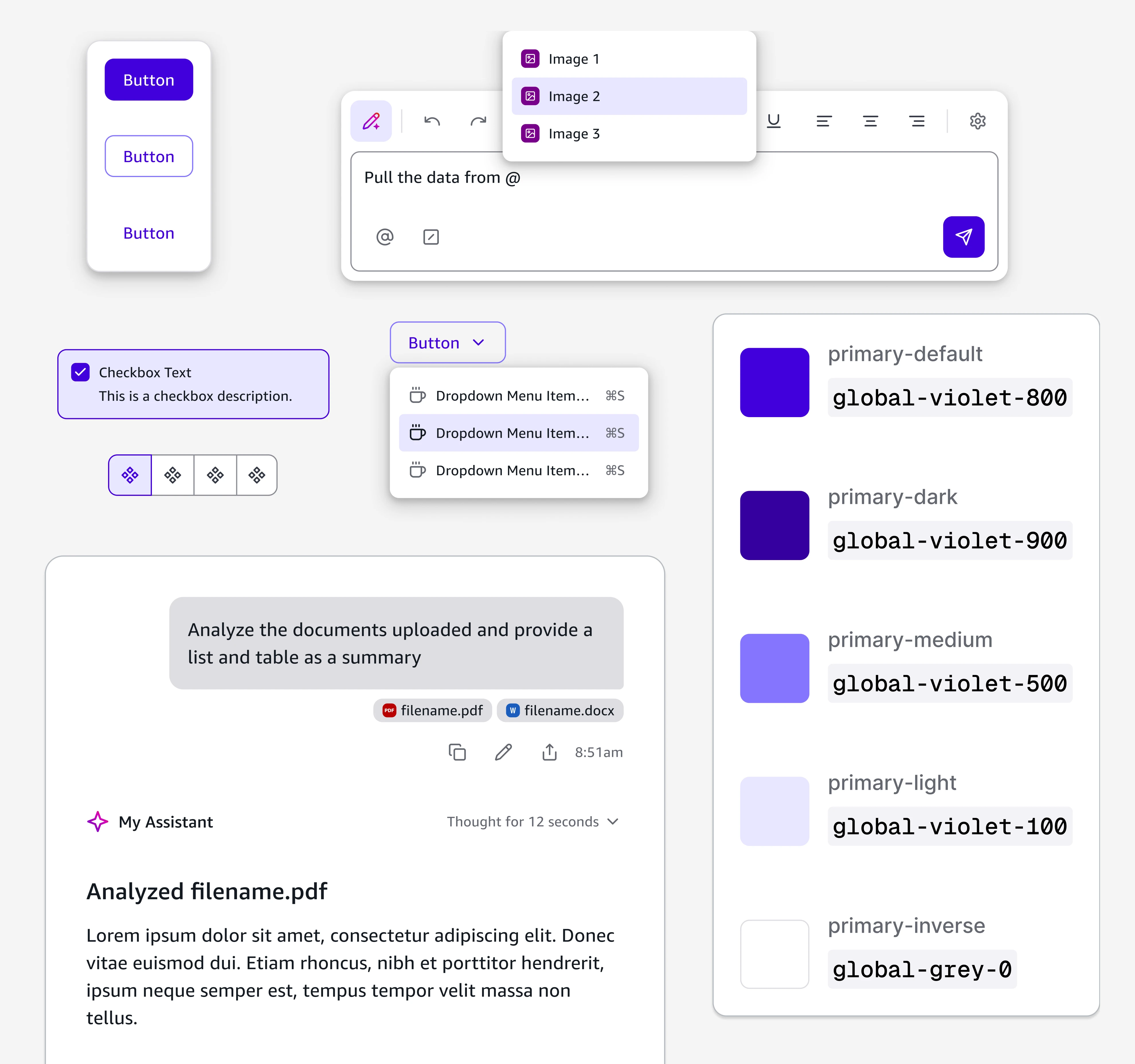
Role
Design System Architect
Company
AWS - Amazon Quick
Duration
6 months+
Problem
Amazon Quick, at launch, was built with the Vega design system which was based on Material UI v4 (MUI4). Investing in the outdated MUI4 posed a growing risk of technical debt and limits the team's ability to innovate.
Migrating to shadcn/ui is a strategic modernization that unlocks flexibility, reduces costs, and strengthens our design system - all of which are critical to supporting Amazon Quick’s next phase of growth and innovation. Of the 285 open tickets between design and engineering related to Vega issues, 64% were unresolved bugs and fit-and-finish issues. That number shaped the urgency of everything we did and informed the timeline.
My role
After my time with App Studio, I joined the Vega design system. Vega was getting replaced as it is no longer scalable, so I became the design system architect, owning the token structure, library authoring, and component building from the ground up. I defined the tokens and styles based off of designs from our visual designer and also served in an educational role so I could bring in additional help to build the system along with me. Scaling the work meant scaling the knowledge first.
From there I stayed close to the quality and consistency of the library from conception all the way to the first release. Additionally I served as the lead point of contact with engineering for sign offs and led design team governance across the new system. I hosted office hours, bi-weekly reviews of work from other teams, and wrote documentation for engineers and designers.
Goals
The existing Vega system, built on MUI4, had developed real and noticeable growing pains. Inconsistent base atoms and scaling challenges were creating friction across the product, and with AI-assisted tooling on the horizon the foundation needed to be solid and future proofed. The goal was to build components the right way this time. Scalable atoms, consistent organisms, and an implementation that carried design intent all the way through to the user.
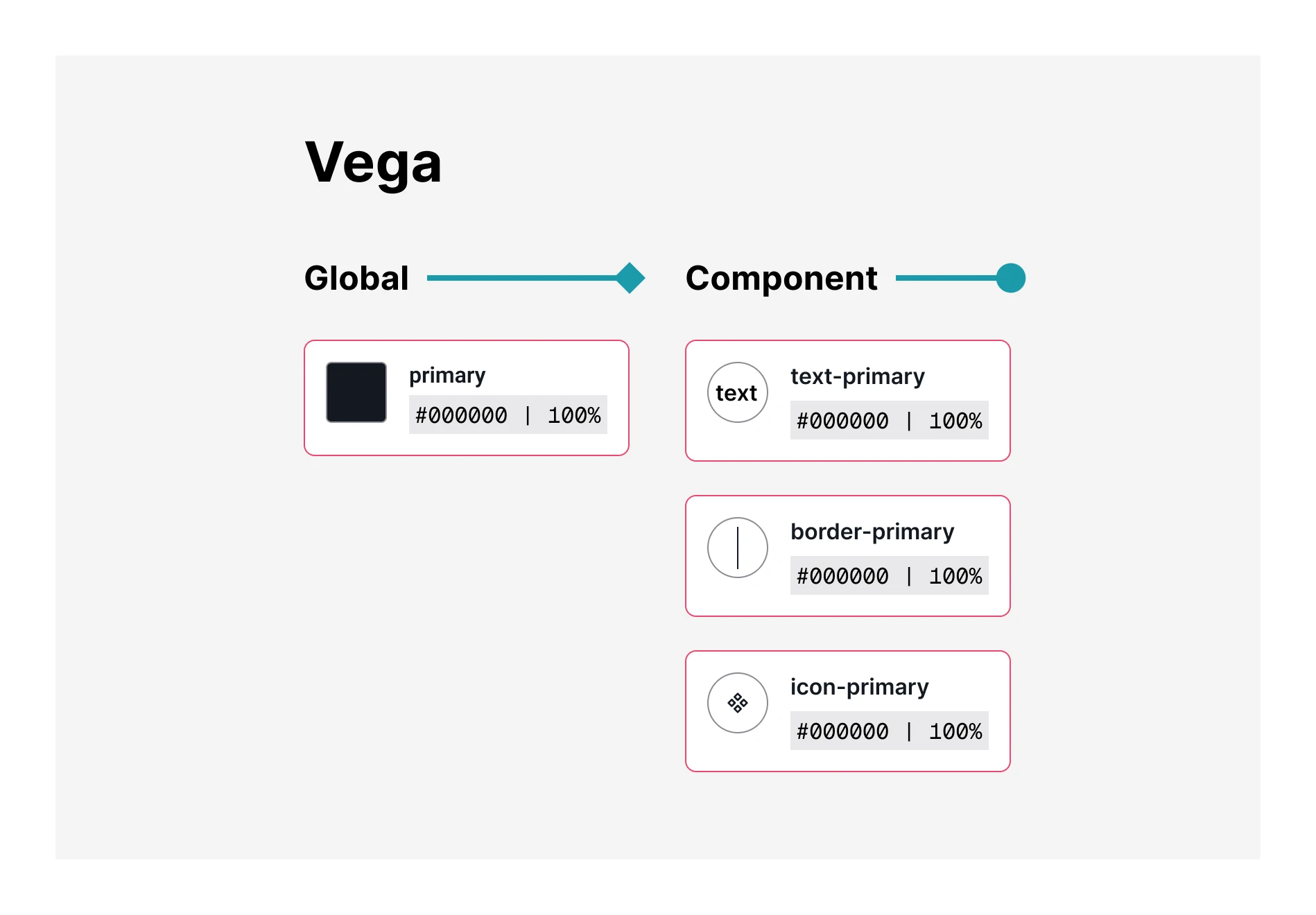
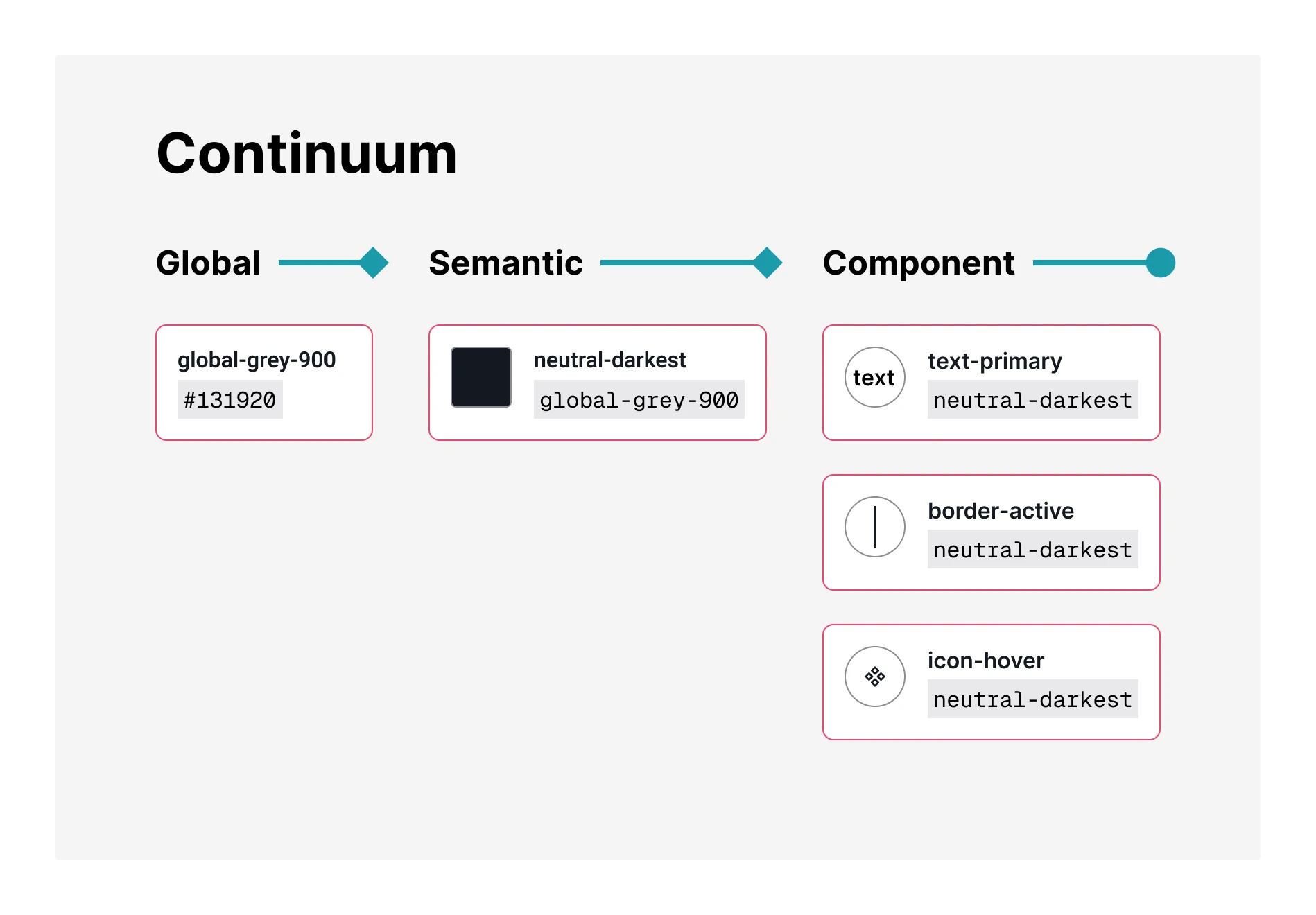
Continuum is different from other AWS Amazon design systems
Continuum wasn't just a visual refresh, it was a rethinking of how the system was built and what it needed to support. The most significant shift was designing for AI-first components and allowing for the emergence of new technologies from the ground up. Rather than retrofitting AI patterns into an existing system, we designed for them from day one. That decision shaped everything from component structure to token architecture.
Under the hood, Continuum is built on shadcn/ui with custom styling layered on top which gave us a solid and well-maintained foundation without being locked into someone else's design language. The token structure from Vega was also rebuilt from scratch using Tailwind CSS, replacing Vega's approach with something more modern that engineering could work with naturally rather than around.
Together these decisions gave Continuum a level of flexibility and longevity that Vega couldn't offer.
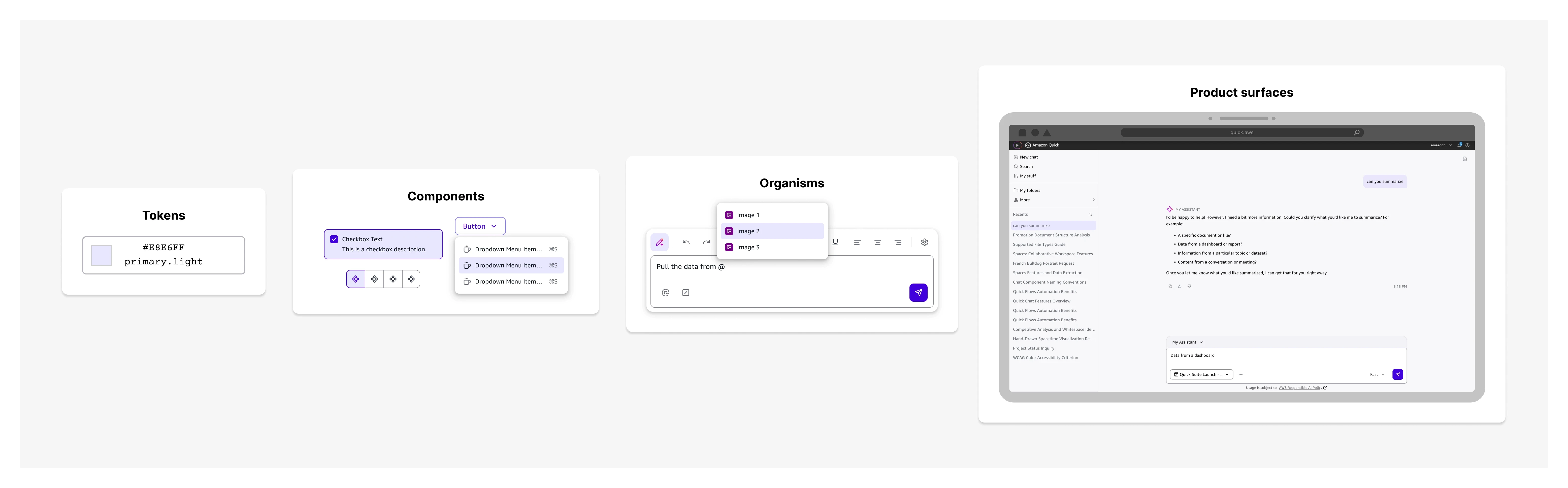
Discovery
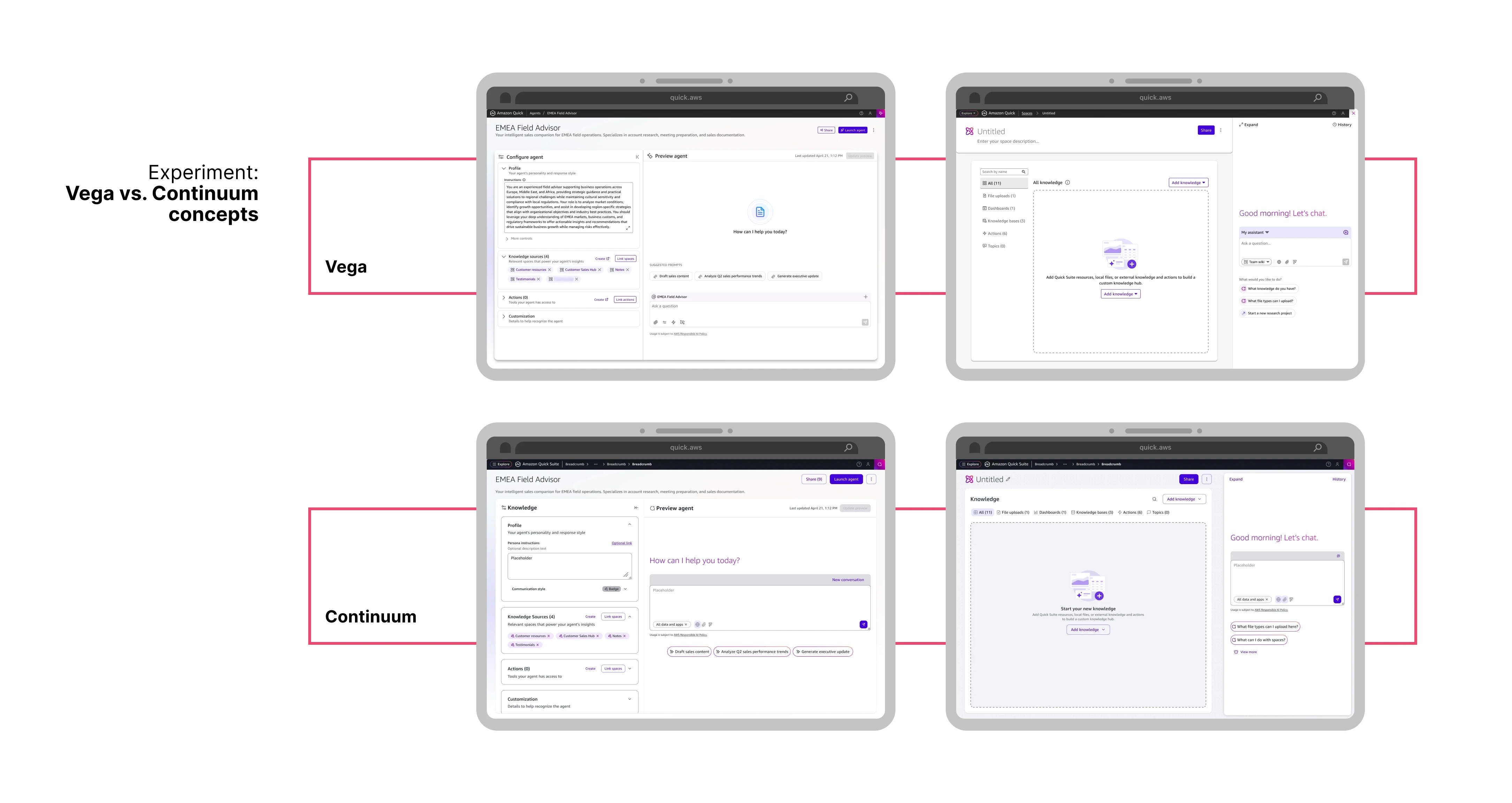
Rather than trying to fix everything at once, we defined 5 key pages and 5 complex components as core test cases to stress-test the new system and focus effort on the highest-impact areas.
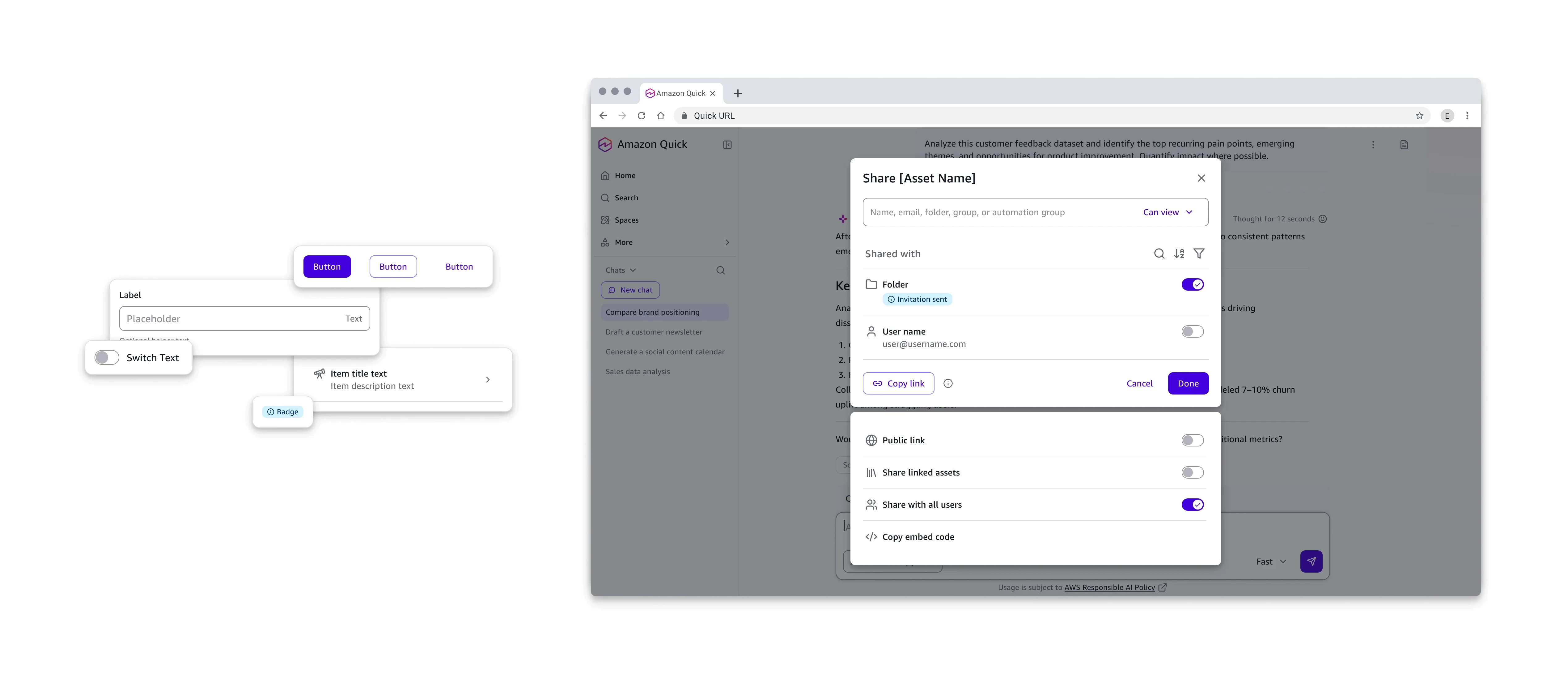
Complex components: Chat, forms, share, action cards, menus
Key pages: Spaces, Chat builder, Flows, Analysis, Integration modal
From there we ran a full audit of Vega against the new shad/cn-based system, identifying 66 core Vega components that needed to be accounted for in the migration. That audit became the blueprint for everything that followed.
Process
I started with shadcn as the foundation and built Continuum from there. The first order of business was a token audit of Vega. I went through everything that existed in Vega, consolidating terms and identifying gaps. Typography, elevation, and spacing tokens like padding and gaps were either missing or inconsistent, so I added those in based on Tailwind CSS along a 4px grid. From there I worked closely with engineering to align on format so both sides were speaking the same language from the start.
With the token structure taking shape, I began retrofitting the shadcn library with the existing Vega tokens and styles, and wired up the variables in a way that would let me swap in a new theme once the updated styles came in. That decision paid off quickly. When the visual designer delivered the new style sheet, creating the new theme was a matter of applying new variable values rather than rebuilding from scratch.
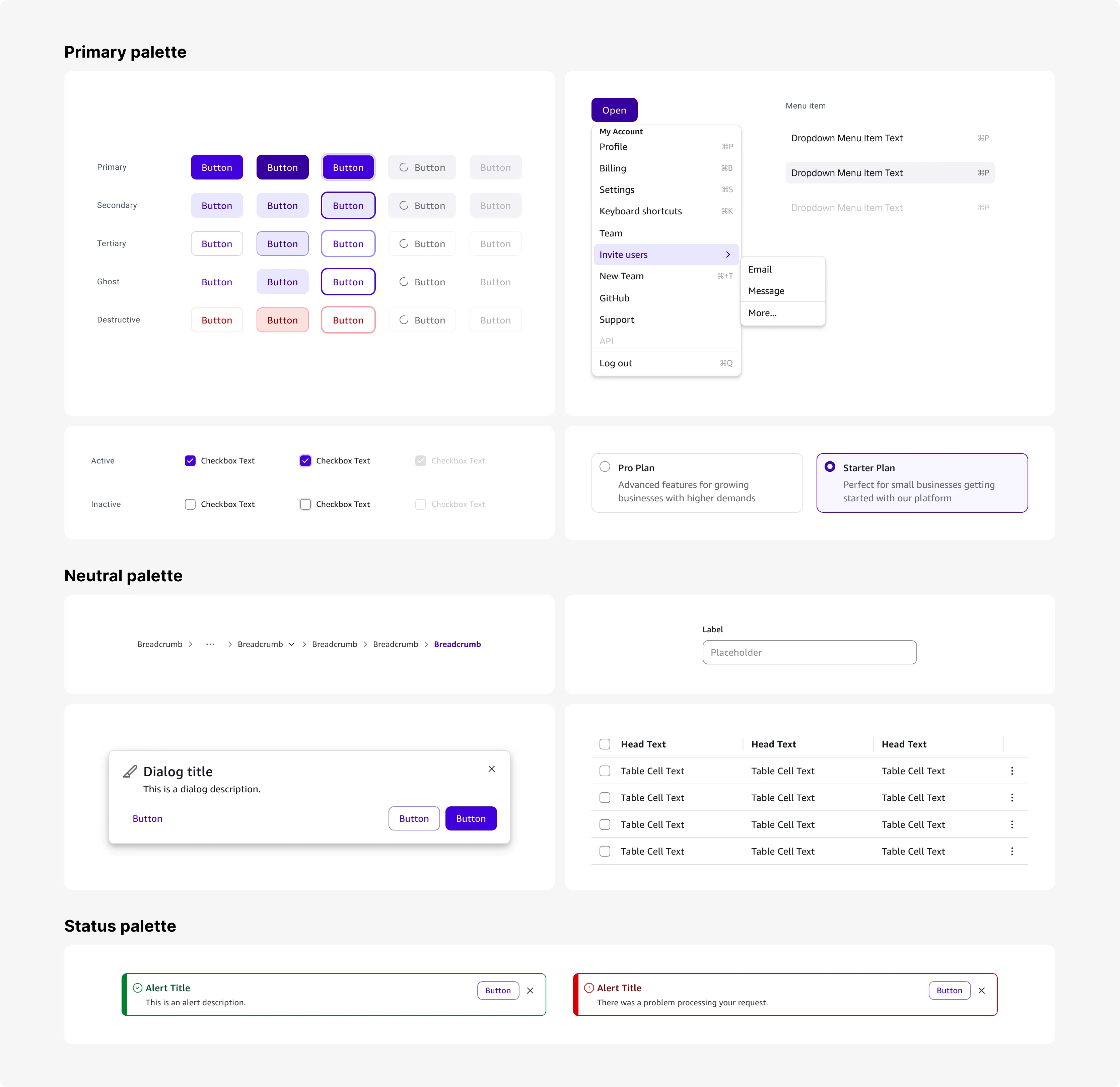
The last piece was cleaning up the naming to ensure consistency across all states, atom names, and variants. As the new styles were applied, I took the opportunity to bring real consistency to component labels across the board. For example when naming buttons, contained became primary, outlined became secondary, and the scattered use of "main" and "default" was consolidated into a single, predictable convention (default). It sounds small but it made a meaningful difference in how intuitive the system was to work with.
Outcome
The first milestone was released on time with 60 components including design and engineering documentation which was completed within the 4 month timeline leadership granted us. This project is still ongoing, and with the success of milestone 1 we were able to take the process and token structure I created into a shorter timeline for the remainder of the design system to be completed. The Continuum design system has taught me so much about technical limitations for an existing product, managing multiple targets and timelines and including other designers into the system to help scale faster and eliminate tech and design debt. I was given the opportunity to be the architect of the entire system based off of my already 5 years experience in design system UX and it continued to light my passion for design systems and consistency throughout products.
Other projects
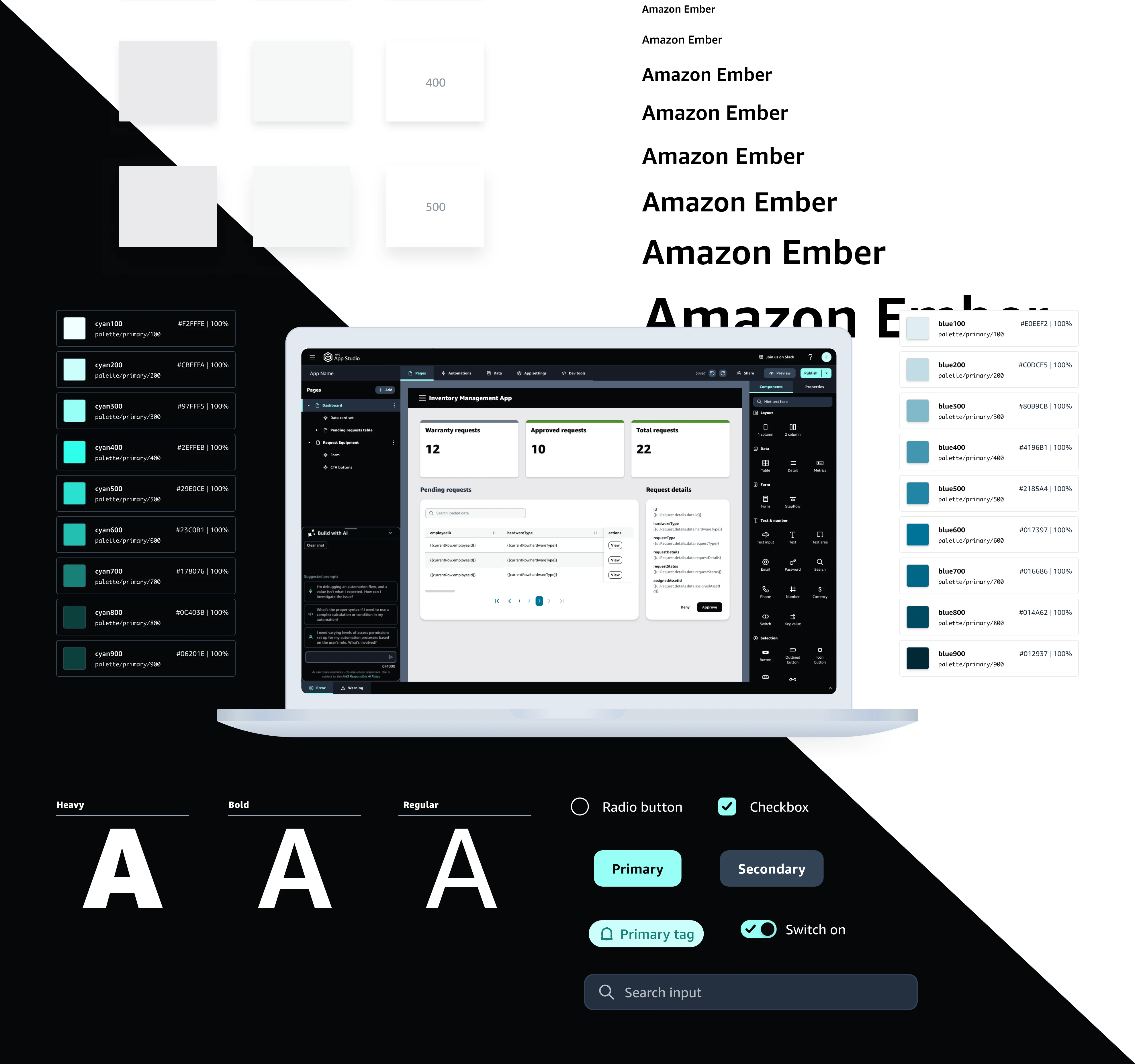
Hexagon design system
A ground-up redesign of an enterprise design system built to scale AI-first products, reduce tech debt, and empower teams to move faster.
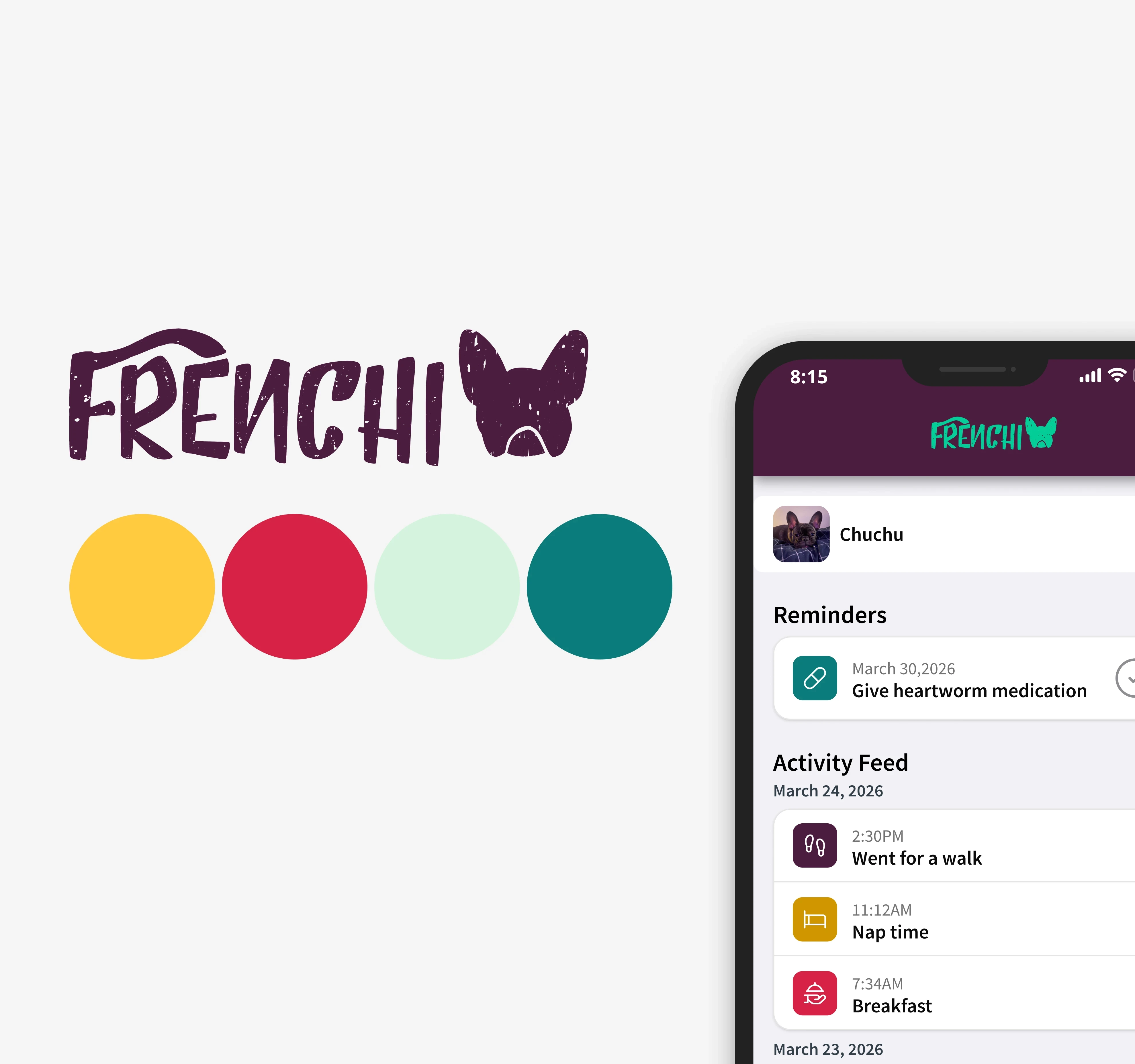
Frenchi App
A personal exploration of an app to help manage my three french bulldogs.
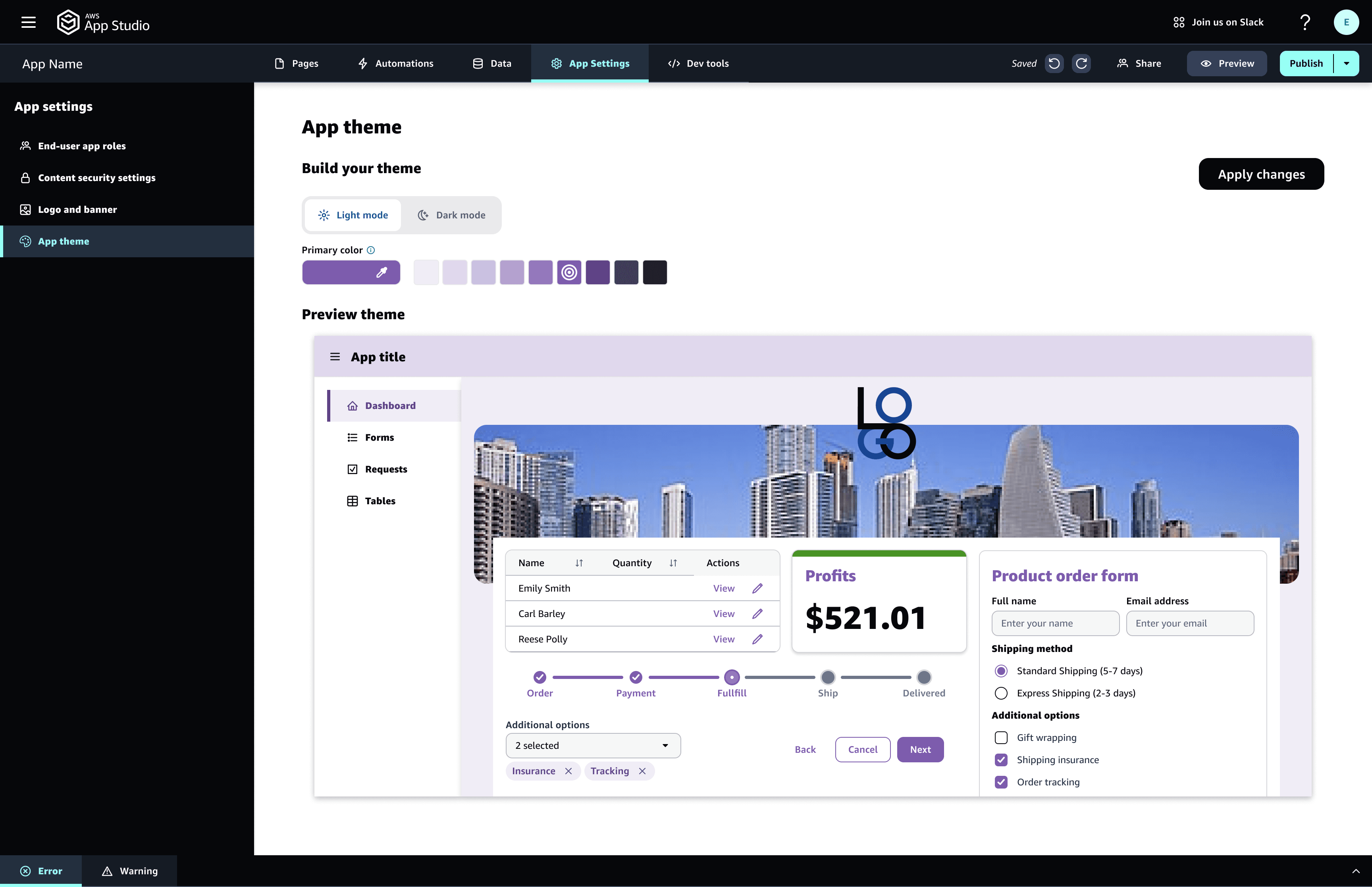
App Theming
Upgraded custom app theming experience based on customer feedback